400 Square Foot Parking Pad Built Right From the Ground Up
A tight driveway is one of those problems that sounds minor until you're trying to squeeze a boat trailer in without tearing up your lawn every single time. This homeowner needed more usable space - not just a flat patch of ground, but something solid enough to actually hold up under the weight of a boat and trailer long-term.
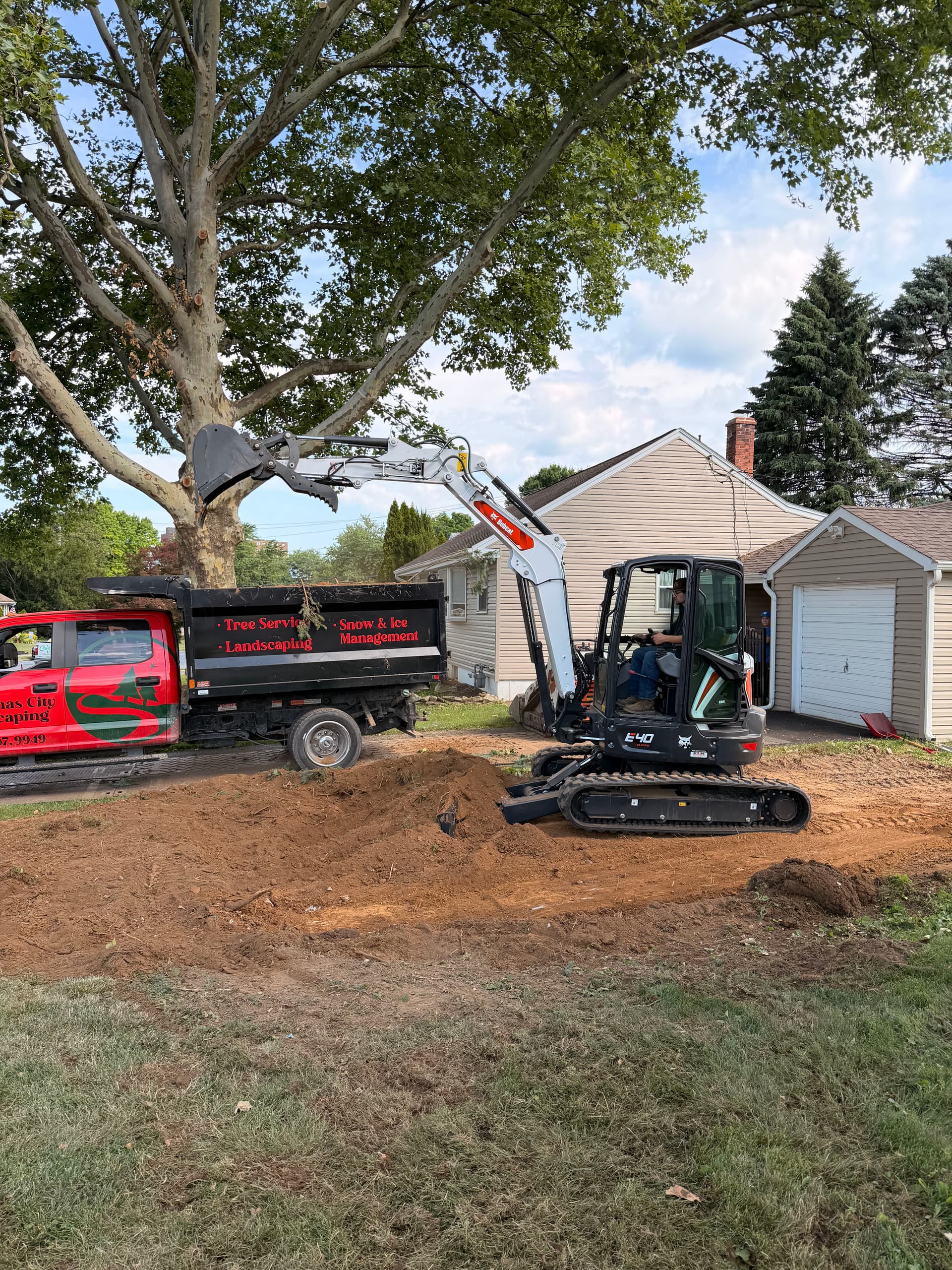
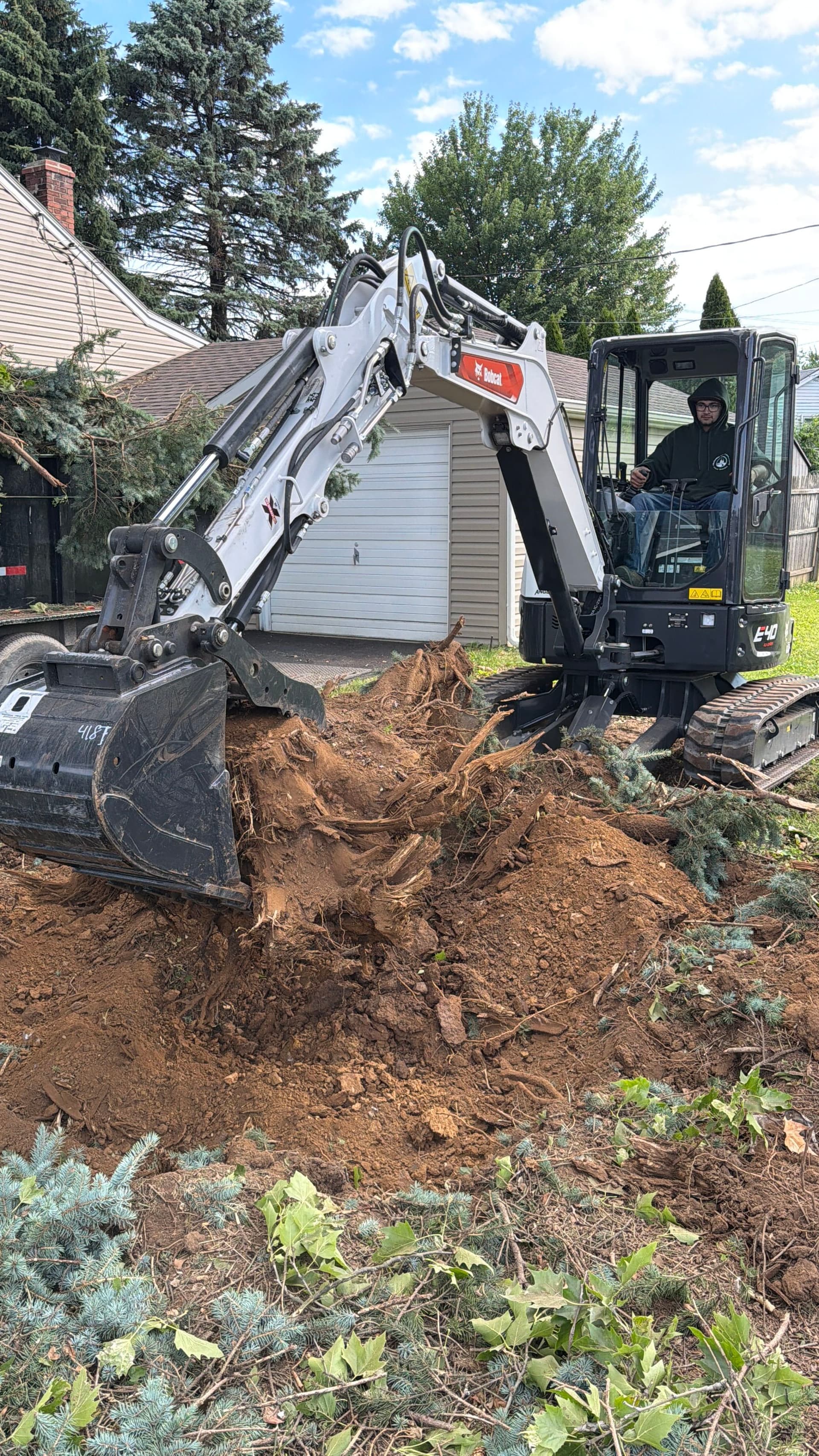
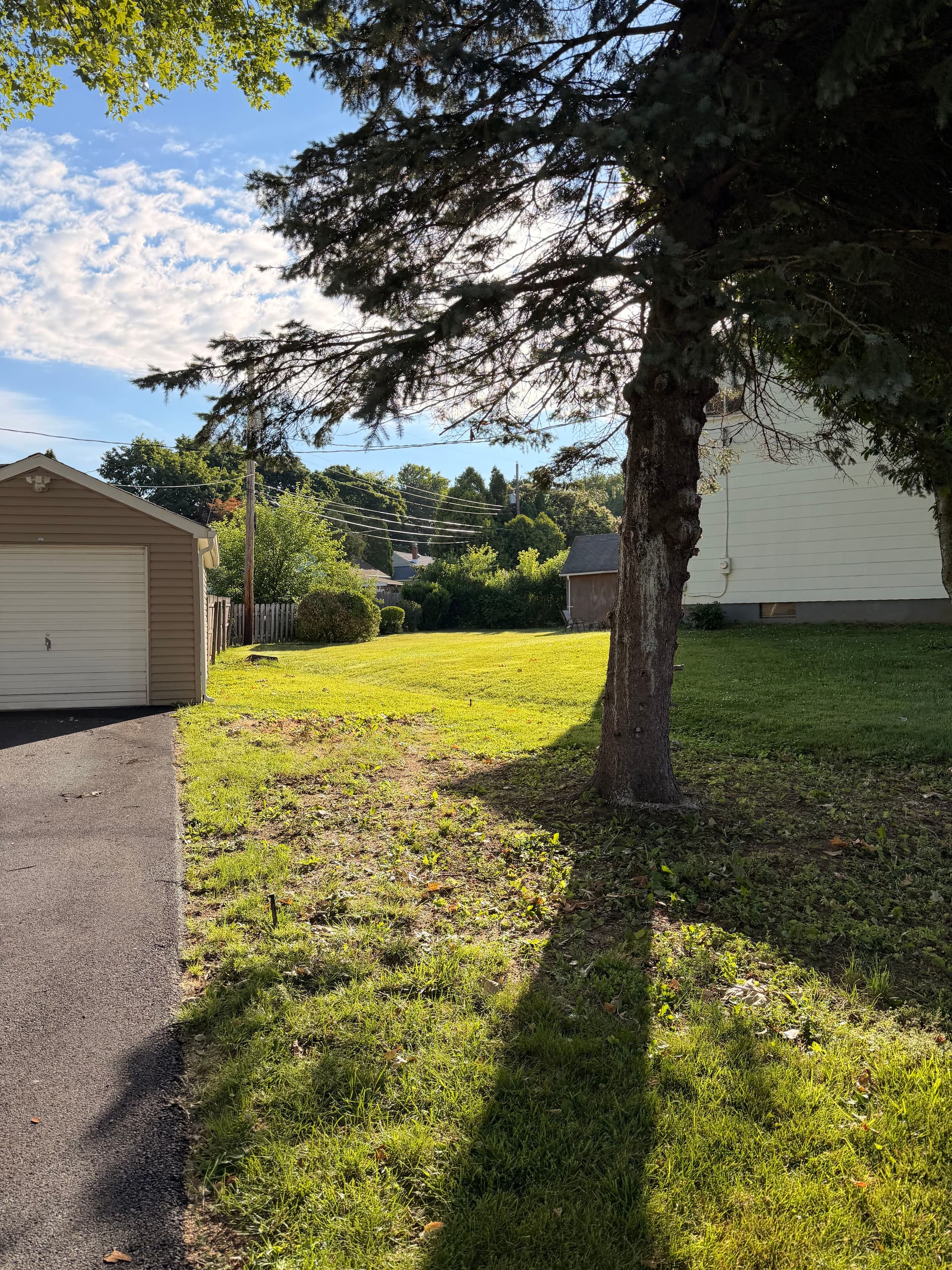
Here's what we were working with before we touched anything: a narrow strip of grass running alongside the existing asphalt driveway with shrubs and root systems taking up space that could be put to much better use. Before any stone goes down, that ground has to be cleared and prepped properly. We used the Bobcat E40 excavator to pull out the shrubs and root balls, then got to work on the excavation and grading. Getting the grade right is the part most people don't think about - it's what keeps water from pooling and the surface from shifting over time.
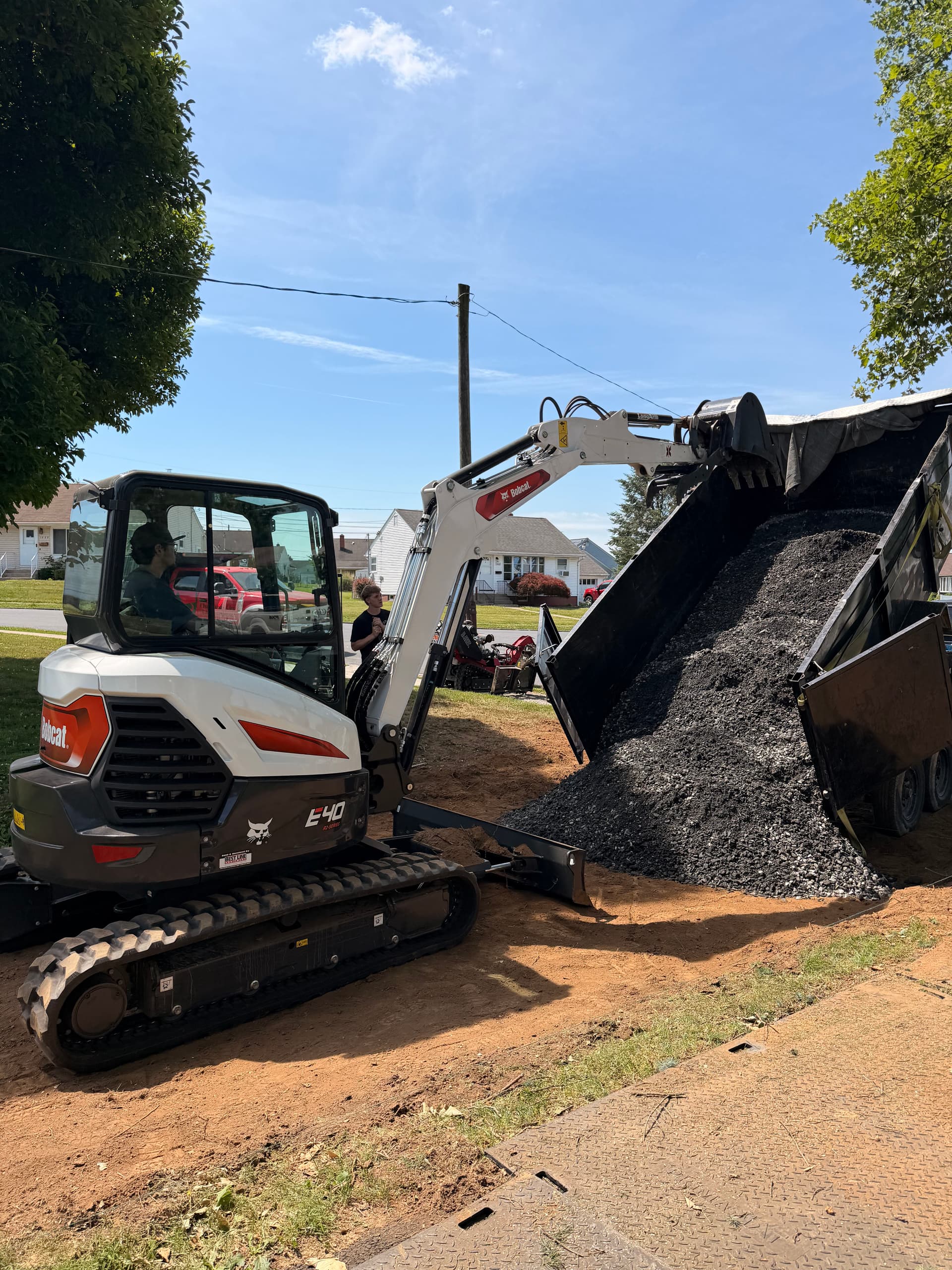
Once the area was excavated and graded, we brought in the stone base. A proper base is what separates a parking pad that holds up for years from one that starts sinking and shifting after the first hard rain. We're talking real compacted stone - not just a thin layer of gravel thrown on top of bare dirt.
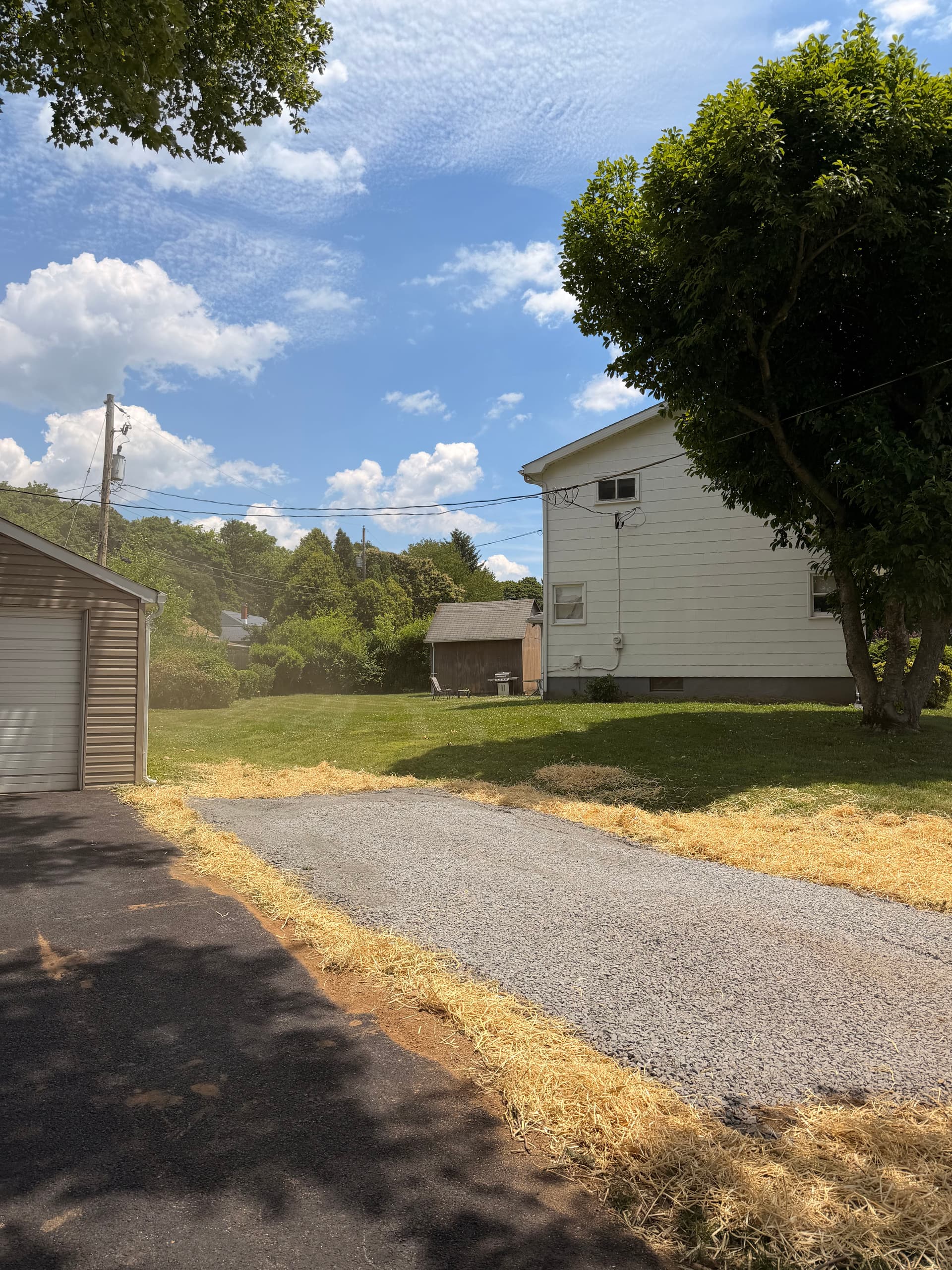
The finished pad came out to roughly 400 square feet of clean, level gravel surface running alongside the existing driveway. Straw was laid along the edges to protect the disturbed soil while it settles. The homeowner now has a dedicated, stable spot to park the boat without worrying about ruts or soft ground giving way under the trailer tires.
A lot of what we do - land clearing, tree removal, stump grinding - feeds directly into projects like this one. Clearing the overgrowth and getting the ground ready is just as important as what goes on top. If your driveway is running out of room or you've got a vehicle, trailer, or equipment that needs a permanent home, this kind of work is straightforward and makes a real difference in how you use your property.