Overgrown Shrubs Out, Low-Maintenance Planting Design In - Bethlehem PA
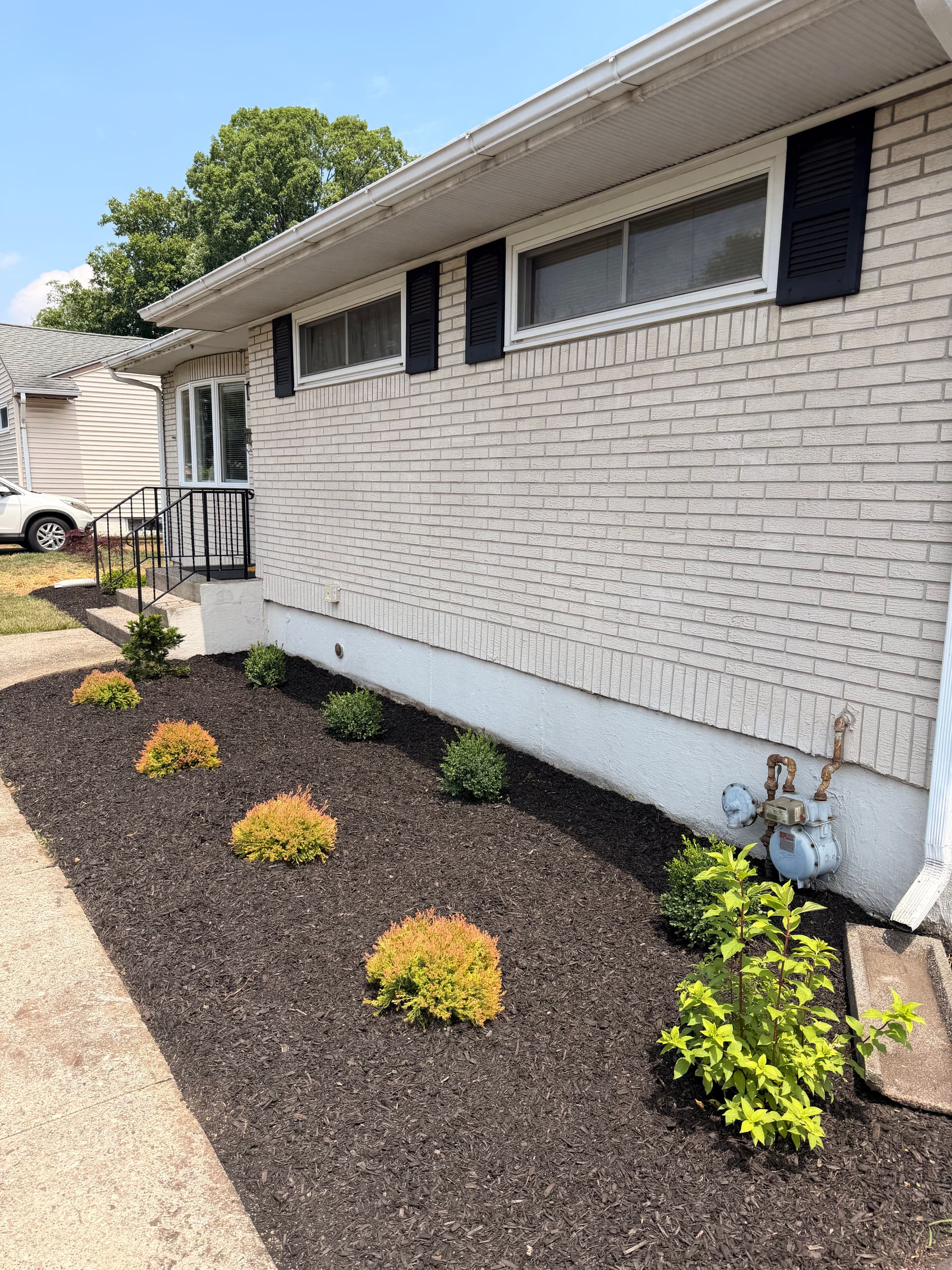
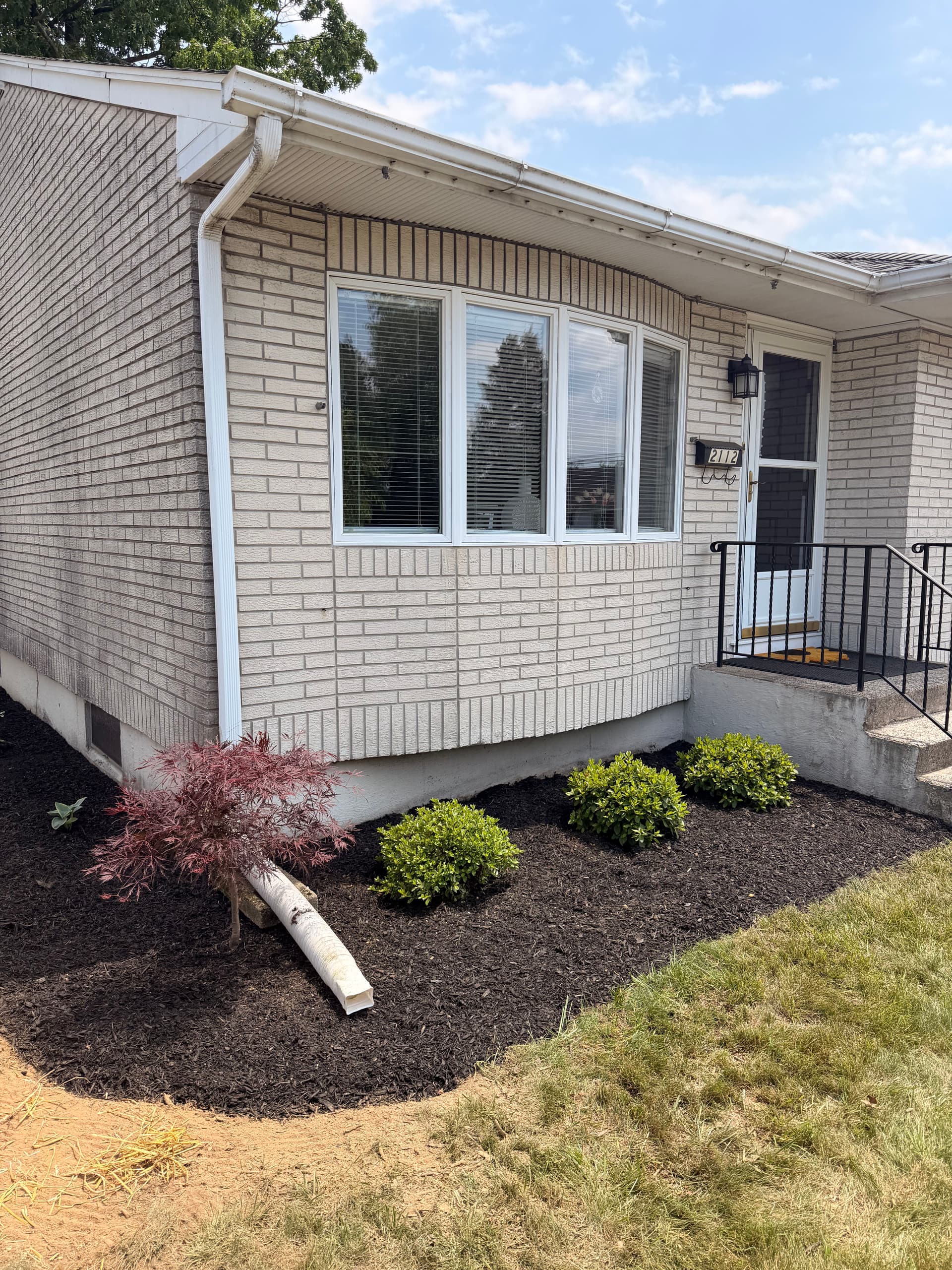
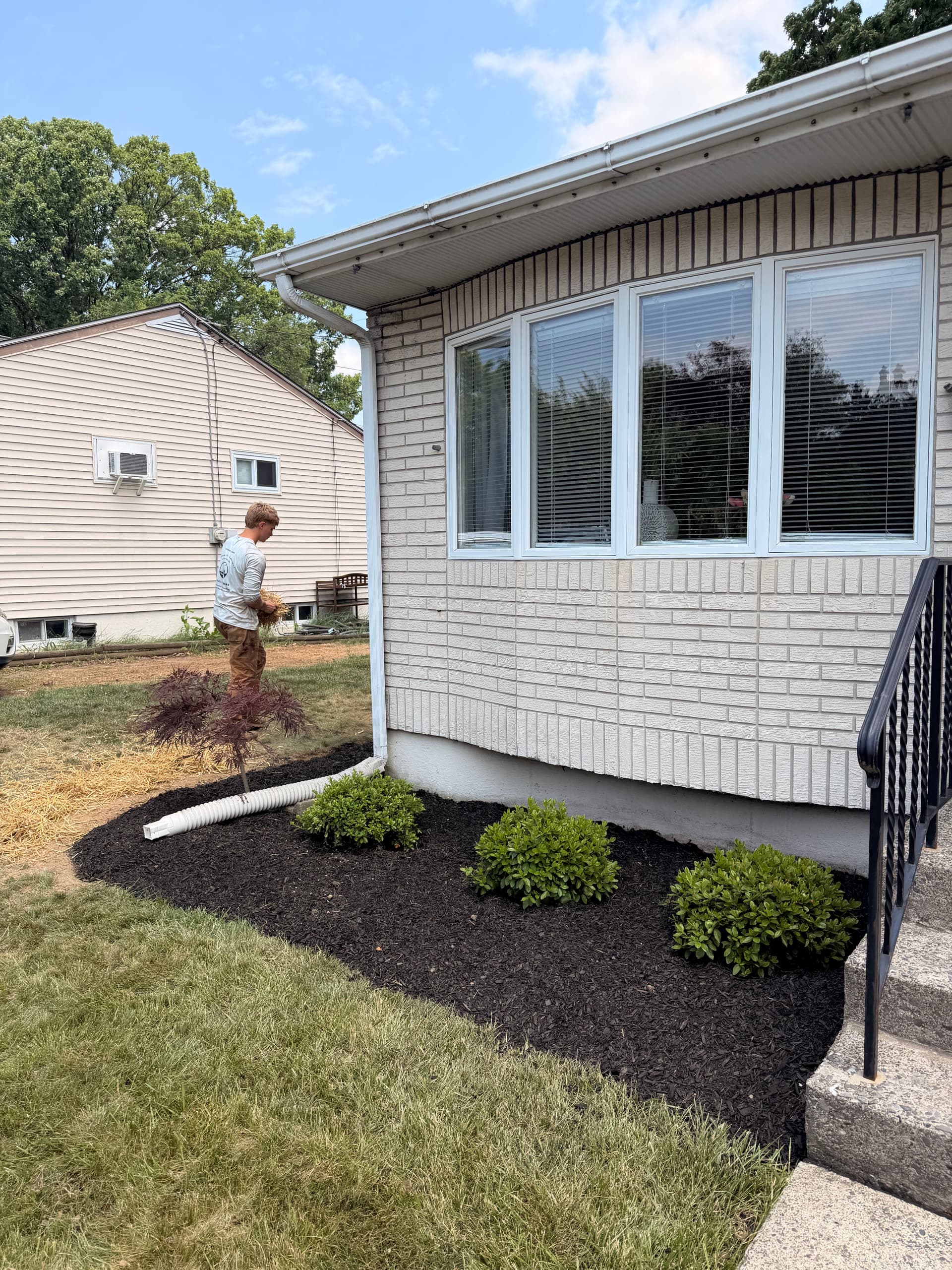
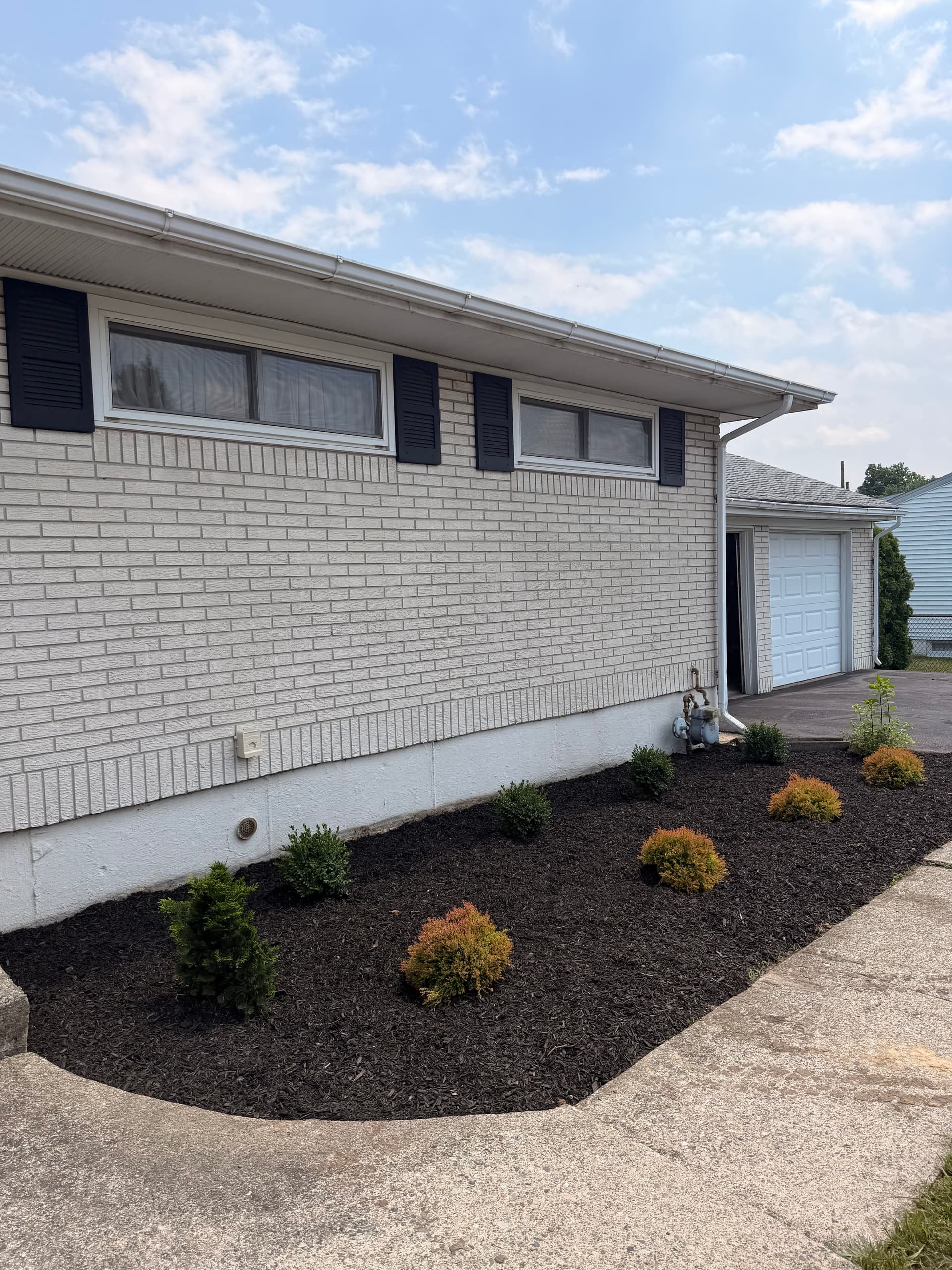
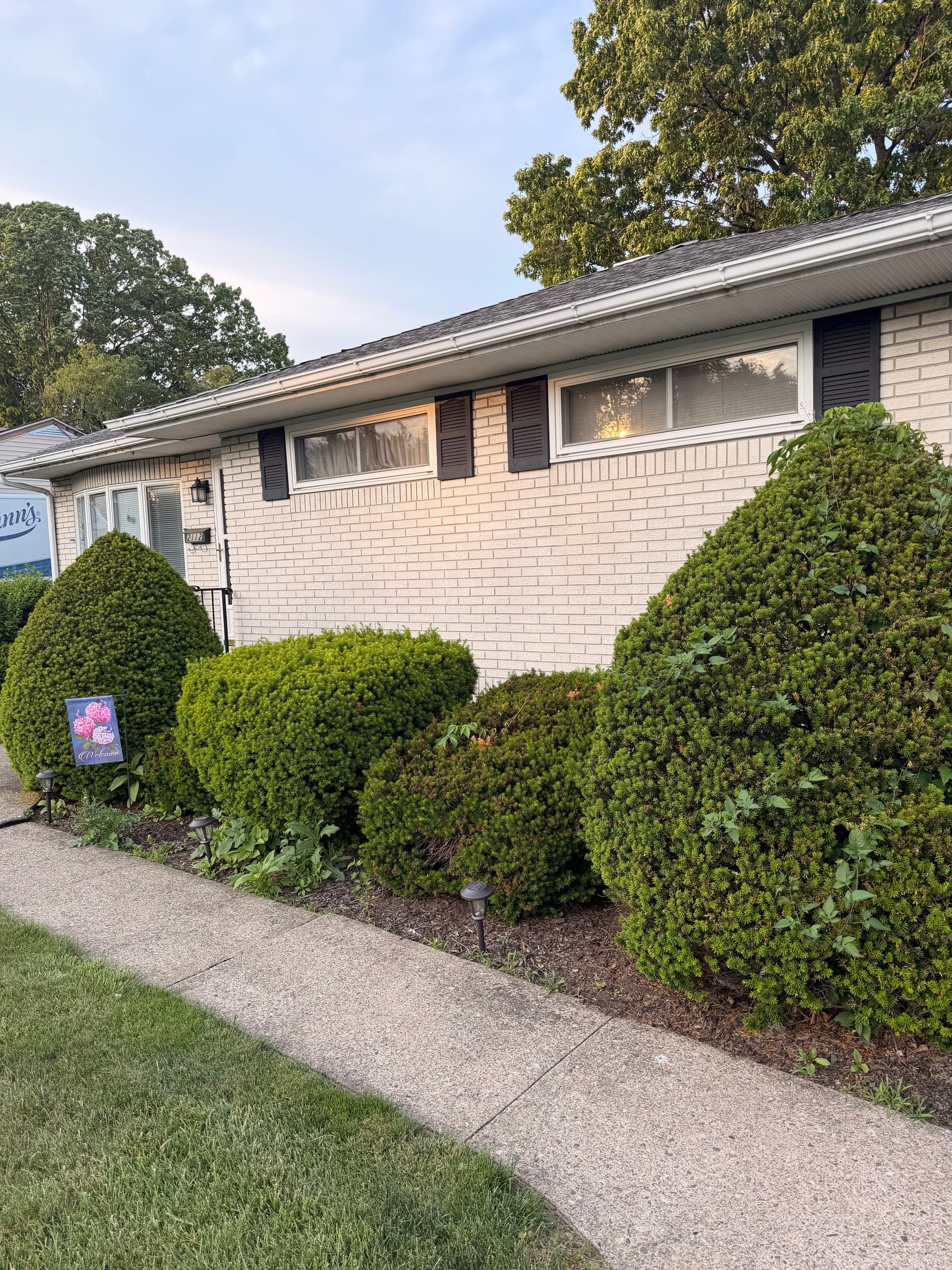
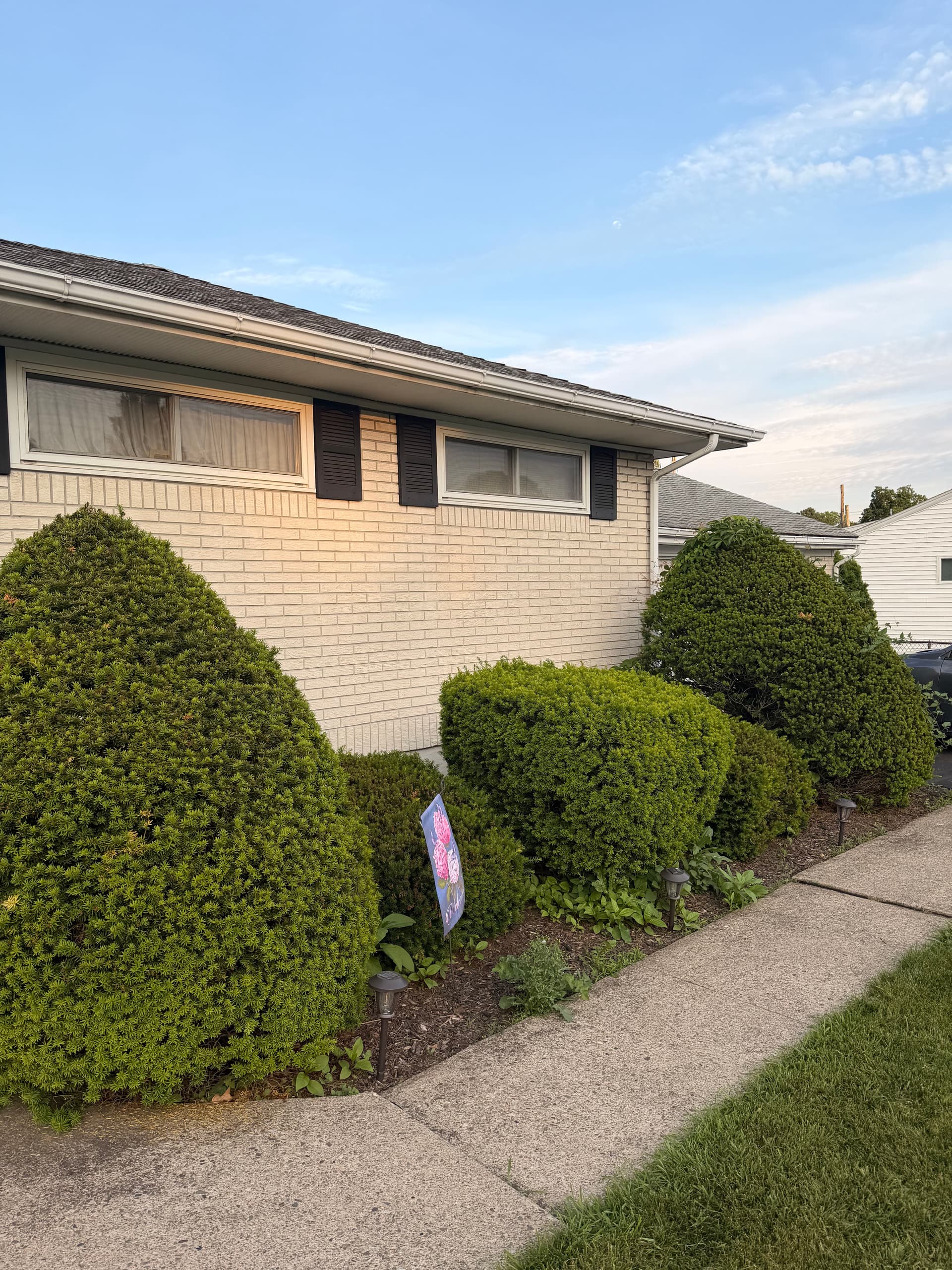
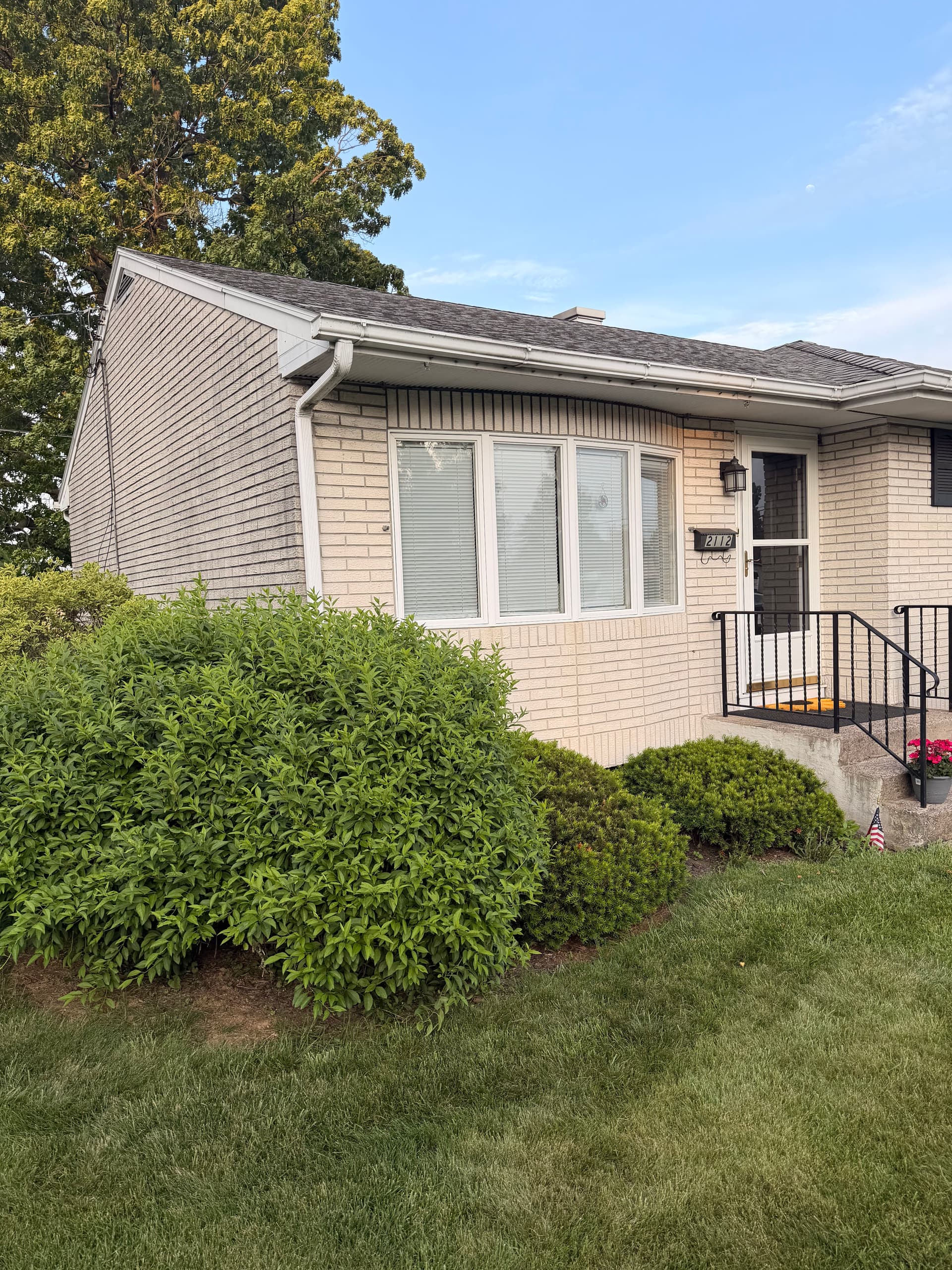
Here's what we were working with - a front foundation bed packed with large, overgrown shrubs that had basically taken over. They were crowding the windows, pushing out past the bed lines, and demanding constant trimming just to stay in check. A lot of homeowners put up with this for years before calling us. Honestly, it's one of the most common situations we run into.
The goal wasn't just to make it look better. It was to make it work better. We pulled the old shrubs out and started fresh with a planting plan built around compact, slower-growing varieties - rounded barberries, low boxwoods, and a young Japanese maple as a focal point near the entry. Plants that fit the space instead of fighting it.
Fresh dark mulch went in across the entire bed, clean edge to clean edge. It does more than just look sharp - it holds moisture, cuts down on weeds, and reduces how much time the homeowner spends out there maintaining things. That's the whole point of a well-designed planting bed.
What we ended up with is a front yard that actually complements the house. The brick and the clean lines of the home now have room to breathe. No more shrubs blocking windows or spilling onto the walkway. Just a tidy, well-proportioned planting design that's easy to keep up with season after season.
This is what good residential landscape maintenance and planting design should do - solve a real problem for the homeowner. If your foundation beds have gotten away from you, this kind of reset is a lot more straightforward than most people think.